Learn the signs of an enlarged prostate and the modern minimally invasive options available.
What Is BPH?
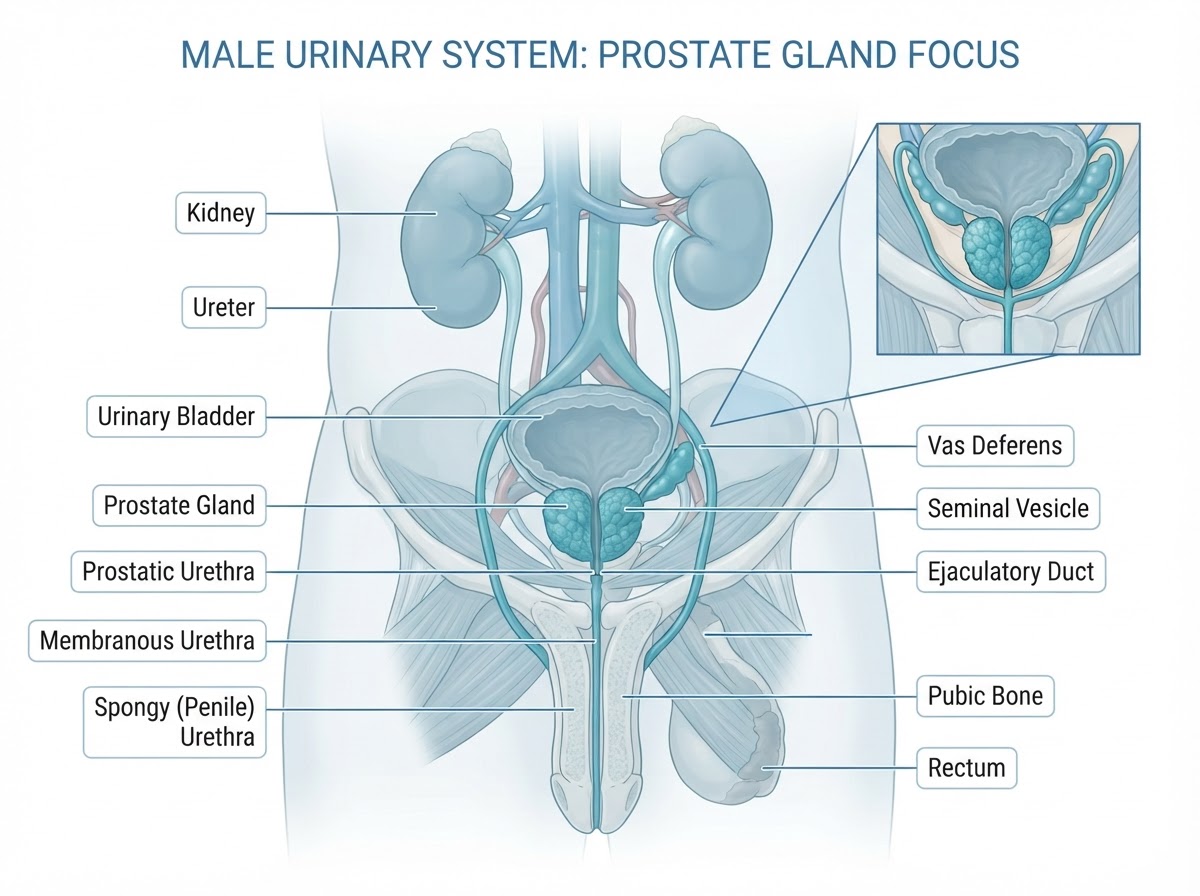
Benign Prostatic Hyperplasia (BPH) is a non-cancerous enlargement of the prostate gland that affects many men as they age. By age 60, about half of men experience symptoms; by 80, the figure rises to 90%. The prostate surrounds the urethra, so as it grows, it can squeeze the urinary channel and cause bothersome voiding symptoms.
Recognizing the Symptoms
BPH symptoms fall into two categories. Storage symptoms include frequent urination, urgency, waking multiple times at night (nocturia), and urge incontinence. Voiding symptoms include a weak stream, difficulty starting, straining, dribbling, and the feeling of incomplete emptying. Some men also experience urinary retention or recurrent infections. If these symptoms interfere with sleep, daily activities, or confidence, it’s time to seek help.
What Causes the Prostate to Enlarge
The exact cause isn’t fully understood, but age-related hormone changes play a central role. As men age, dihydrotestosterone (DHT) levels shift, stimulating prostate cell growth. Family history, obesity, diabetes, and heart disease also increase risk. BPH is not prostate cancer, and having BPH does not raise your cancer risk — but the two can coexist, which is why screening matters.
How BPH Is Diagnosed
Diagnosis starts with a symptom questionnaire (IPSS score), a digital rectal exam, and a PSA blood test. Your urologist may also order a urinary flow test, post-void residual ultrasound, or cystoscopy to assess prostate size and bladder function. These tests help rule out other conditions and guide treatment decisions.
Treatment Options: From Watchful Waiting to Surgery
For mild symptoms, lifestyle changes and watchful waiting may suffice. Medications like alpha-blockers relax the prostate muscle to improve flow, while 5-alpha reductase inhibitors slowly shrink the gland. When medication isn’t enough, minimally invasive procedures offer excellent results with quick recovery. UroLift uses tiny implants to hold the prostate open. HoLEP (Holmium Laser Enucleation of the Prostate) removes obstructive tissue with a laser. Laser therapy and transurethral resection (TURP) are also effective. Your urologist will recommend the best option based on prostate size, symptom severity, and your overall health.
Don’t Ignore the Signs
Untreated BPH can lead to bladder damage, recurrent infections, stones, and acute urinary retention. If you’re waking up several times a night, avoiding social outings because of bathroom anxiety, or straining to urinate, schedule a consultation. Modern treatments are highly effective, and most men see dramatic improvement in quality of life.
Dr. Jarvie Marchadesch Collantes
Functional Urology & Male Genital Enhancement Specialist
Board-certified urologist providing confidential, personalized urologic care at UroElite Urology Clinic, Visayas Medical Hospital, Cebu City.
Reviewed by Dr. Jarvie Marchadesch Collantes
Have a Urology Concern?
Book a confidential consultation with Dr. Collantes at UroElite Urology Clinic in Cebu City.